Last updated on August 17th, 2025
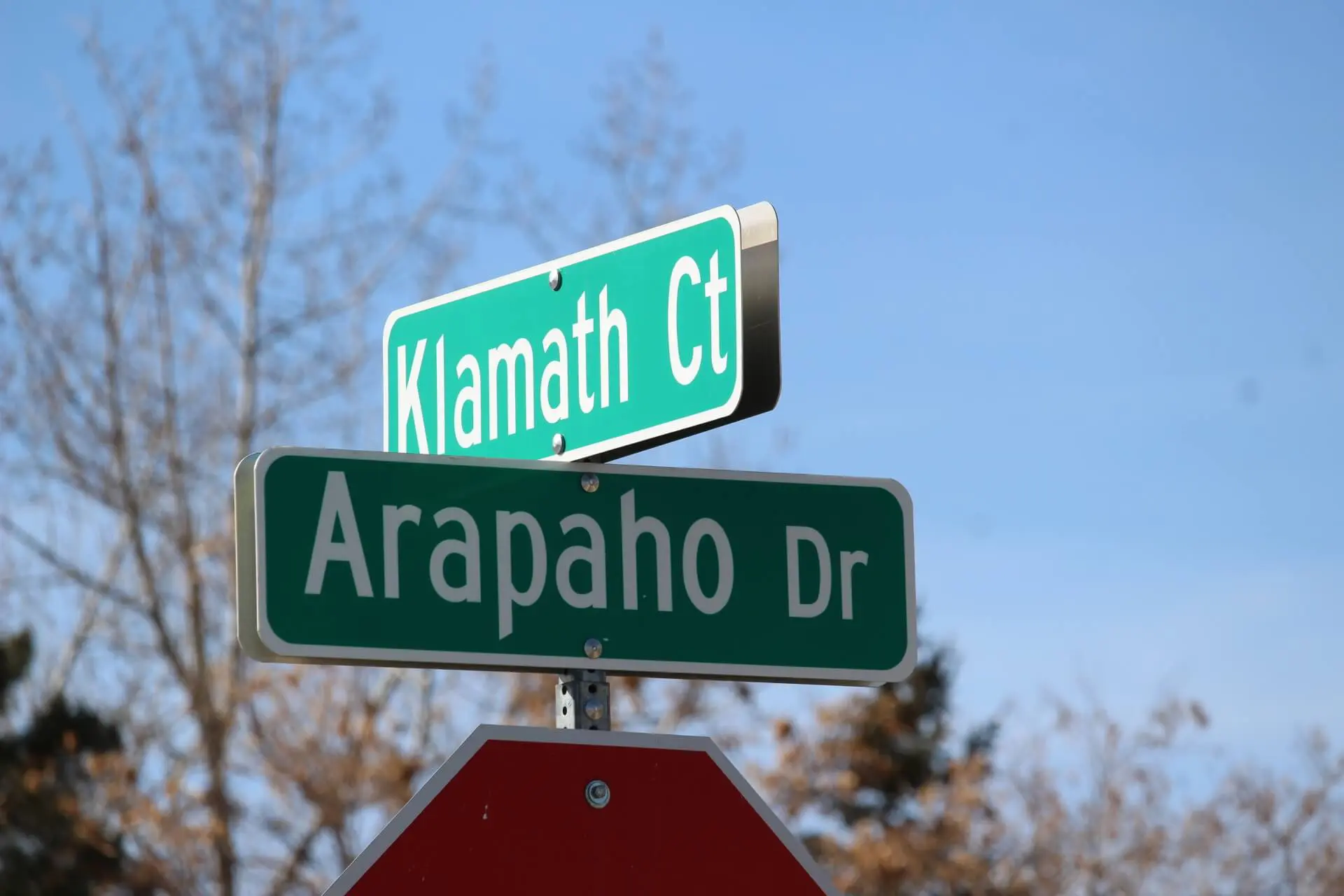
Walking or driving through the Highland Ranch community in Sun Valley, Nevada, you’ll see many street names referring to Native American tribes. These streets occur in the Stone Creek neighborhood, one of three neighborhoods within Highland Ranch.
A brief snippet for each tribal name is presented below to perhaps pique your curiosity into learning more about these indigenous peoples who inspired the namesakes of the largest subdivision within the Highland Ranch community.
Arapaho: The Arapaho are an indigenous people historically living in what is now Colorado and Wyoming in the United States of America. Traditionally, they were nomadic bison hunters who lived in tipis (teepees) and followed seasonal migrations across the plains. Their culture was rich in spiritual traditions, including the Sun Dance, an important religious ceremony involving endurance and sacrifice.
The Arapaho are most famous for their role in resistance efforts during the Indian Wars of the 19th century, particularly in battles such as the Sand Creek Massacre (1864), where many of their people were tragically killed by U.S. troops despite efforts at peace. They also played a significant part in shaping trade networks across the Plains, known for crafting fine beadwork and clothing. They continue to preserve their language and cultural traditions while also engaging in modern governance and economic development. For more information: https://en.wikipedia.org/wiki/Arapaho
Crow: The Crow are a Native American people living primarily in Montana, USA, especially around the Yellowstone River valley, which runs from present-day Wyoming, through Montana, and into North Dakota. The Crow have also been known as the “children of the large-beaked bird” (a reference to the raven or legendary Thunderbird). https://en.wikipedia.org/wiki/Crow_people
Chinook: The Chinook Indian Nation consists of 5 related tribes who live near the mouth of the Columbia River (the river which divides Washington State from Oregon). https://publichistorypdx.org/projects/chinook/lower-columbia-chinook-historical-timeline/
Cree: Not to be confused with the Kree (made famous by Marvel Studios), these bands of native North Americans live predominantly in Canada (and Montana in the United States). Numbering more than 350,000, they form one of Canada’s largest First Nations. https://en.wikipedia.org/wiki/Cree
Choctaw: Most people have heard of the World War II Navajo Code Talkers, instrumental in helping fight against the Japanese. However, the Navajo weren’t the first to help the U.S. Military during a world war. During World War I, the Choctaw Code Talkers used the Choctaw language as a code to transmit secret tactical messages against the Germans. https://www.choctawnation.com/about/history/code-talkers/
Yakima: The Yakama (often spelled “Yakima” in older texts, but the tribe officially changed it to “Yakama” to reflect the spelling on their 1855 treaty) are a Native American tribe from the Plateau region of what is now south-central Washington state. The tribe is a confederation of 14 different tribes and bands, united under a single government. Historically, the Yakama people were semi-nomadic, moving seasonally to hunt, fish, and gather roots and berries. Salmon fishing in the Columbia and Yakima rivers was a cornerstone of their culture and economy. They lived in winter villages of semi-subterranean pit houses and used portable tepees during summer travels.
In 1855, the Yakama and other tribes ceded over 11 million acres of land to the United States government in exchange for the Yakama Reservation. The treaty, however, sparked the Yakama Indian War (1855-1858) as a result of conflicts with settlers and miners. Today, the Yakama Nation is a federally recognized tribe with a 1.2-million-acre reservation. The tribe maintains its traditions, including fishing rights secured by the treaty, and is actively involved in resource management and economic development. https://en.wikipedia.org/wiki/Yakama
Chickasaw: The Chickasaw are a Native American people from the Southeastern Woodlands, specifically the area of what is now northern Mississippi, northwestern Alabama, western Tennessee, and southwestern Kentucky. Historically known as fierce warriors, they were one of the “Five Civilized Tribes” that adopted many practices of European Americans. Their society was matrilineal, with property and hereditary leadership passed through the mother’s line.
In the 1830s, the U.S. government forcibly removed the Chickasaw and other tribes from their ancestral lands in what is known as the “Trail of Tears.” They were relocated to Indian Territory, which is now Oklahoma. Today, the Chickasaw Nation is a thriving, federally recognized tribe headquartered in Ada, Oklahoma. The Nation has a diverse economy and provides a wide range of services to its citizens, including education, healthcare, and cultural preservation efforts. The Chickasaw Cultural Center is a prominent institution dedicated to sharing and preserving their rich history and traditions. For more information, visit https://en.wikipedia.org/wiki/Chickasaw and https://en.wikipedia.org/wiki/Chickasaw_Nation on Wikipedia.
Klikitat: The Klickitat (or Klikitat) are a Sahaptin-speaking Native American people whose traditional territory was in south-central Washington, particularly along the Klickitat River and north of the Columbia River. Their name, believed to be of Chinook origin, means “beyond the mountains,” referring to their location relative to coastal tribes. Known for being skilled hunters, traders, and horsemen, they had a semi-nomadic lifestyle, moving seasonally to fish for salmon, and gather roots and berries.
In the mid-19th century, the Klickitat were a prominent presence in the region, expanding their influence and even moving into parts of Oregon. However, like many other tribes, they were impacted by disease and settler encroachment. In 1855, many Klickitat people became part of the Confederated Tribes and Bands of the Yakama Nation through a treaty, and most of their descendants are now enrolled members of that nation.
Mohave: The Mohave (or Mojave) are a Native American tribe indigenous to the Colorado River in the Mojave Desert, with their name, “Pipa Aha Macav,” meaning “the people by the river.” Historically, they were prosperous farmers, relying on the annual flooding of the Colorado River to irrigate crops like corn, beans, and pumpkins. They were also known as skilled traders and warriors. Their traditional territory spanned what is now parts of Arizona, California, and Nevada.
Dreams and visions were central to their culture, serving as a source of knowledge and a guide for leaders and healers. Today, the Fort Mojave Indian Tribe is a federally recognized tribe with a reservation that spans these three states. The tribe actively preserves its cultural identity through events like their annual pow wow and manages a diverse economy.
Yukon: The term ‘Yukon’ refers to a geographic area, and therefore a diverse group of First Nations people in the Yukon Territory in Canada. This is not a single tribe, but rather a collection of different groups with unique cultures and languages, many belonging to the larger Athabaskan language family. Prominent First Nations include the Gwichʼin, Hän, Tlingit, and various Tutchone groups.
Historically, they lived a nomadic or semi-nomadic lifestyle, following seasonal cycles to hunt caribou, moose, and other game, and to fish for salmon. The Klondike Gold Rush of the late 19th century had a profound and disruptive impact on their traditional way of life. Today, there are 14 distinct First Nations in the Yukon, with 11 having signed modern self-government agreements, giving them authority over their own lands, resources, and affairs.
Klamath: The Klamath Tribes are a confederation of three tribes: the Klamath, the Modoc, and the Yahooskin Band of Northern Paiute. Their traditional lands are in south-central Oregon and northern California, centering on the Klamath Basin. Historically, they were known for their industriousness, with a culture that prized hard work and individual wealth.
The Klamath people relied heavily on fishing, particularly for c’waam (Lost River suckerfish), as well as hunting and gathering roots and seeds. They lived in semi-subterranean earth lodges during the winter and moved to fishing and gathering grounds in the warmer months. After signing a treaty in 1864, they were confined to a reservation that included the Klamath and Modoc people. Today, the Klamath Tribes are a sovereign nation working to preserve their culture, traditions, and treaty rights, which were restored after a period of federal termination.
Pima: The Pima, or Akimel O’odham (“River People”), are a Native American tribe primarily located in south-central Arizona. They are believed to be descendants of the Hohokam, a prehistoric culture renowned for their sophisticated agricultural techniques. The Pima were exceptional farmers, developing extensive irrigation canals to cultivate crops like cotton, corn, and beans in the arid desert. This farming expertise made them an important trade partner for surrounding tribes and early European and American settlers.
Today, the Pima are part of federally recognized tribes like the Gila River Indian Community and the Salt River Pima-Maricopa Indian Community. They continue to preserve their cultural heritage and have developed a diverse economy through various enterprises, including gaming and tourism.
Potomac: The Potomac Indians, more accurately known as the Patawomeck, are a state-recognized tribe in Virginia. Their ancestral homeland is along the Potomac River in what is now Stafford and King George counties. Historically, they were an Algonquian-speaking people who were a part of the Powhatan Confederacy. Known for their sophisticated agriculture, they cultivated extensive fields of corn and were also skilled hunters and fishers.
The Patawomeck had a complex relationship with both the English colonists and their neighbors. At times, they allied with the English, even helping in the capture of Pocahontas, but at other times they faced hostility and conflict. In 1666, the Virginia colonial government declared war on the Patawomeck, leading to the destruction of their main village. While the tribe disappeared from official records for a period, descendants maintained their community and cultural ties. In 2010, the Patawomeck Indian Tribe of Virginia was officially recognized by the state.
Mono: The Mono people are a Native American tribe whose ancestral lands are in the central Sierra Nevada and adjacent Great Basin areas of California. Historically, the Mono were divided into two main groups: the Western Mono, or Monache, who lived in the Sierra foothills, and the Eastern Mono, also known as the Owens Valley Paiute, who resided east of the mountains.
The Western Mono were semi-nomadic hunter-gatherers, while the Eastern Mono were more sedentary, using irrigation to farm crops. Both groups were skilled traders, with the Eastern Mono exchanging items like pine nuts and salt for goods such as acorns and baskets from the Western Mono.
Today, there are several federally recognized and state-recognized Mono tribes, including the North Fork Rancheria of Mono Indians and the Big Sandy Rancheria. The Mono people are actively involved in preserving their language and cultural practices, such as traditional basket-making and ceremonial events. They continue to maintain strong ties to their ancestral lands and traditions.
Maricopa: The Maricopa people traditionally live in present-day Arizona, and are currently based in the Salt River Pima-Maricopa Indian Community and the Gila River Indian Community. The Maricopa, or Piipaash, are a Native American tribe native to the desert regions of Arizona. Their name, meaning “the people by the water,” reflects their historical reliance on the Gila and Colorado Rivers for agriculture. They were skilled farmers, using irrigation to grow crops like corn, beans, and pumpkins.
In the 1800s, the Maricopa formed a close alliance with the Pima (Akimel O’odham) tribe for mutual protection against other tribes. Today, the Maricopa and Pima share two reservations in Arizona: the Gila River Indian Community and the Salt River Pima-Maricopa Indian Community. They are well known for their traditional red-on-red pottery, a craft that has seen a modern revival. https://en.wikipedia.org/wiki/Maricopa_people
Aleut: The Aleut (or Unangax̂) people are the indigenous inhabitants of the Aleutian Islands, the Pribilof Islands, and the western part of the Alaska Peninsula. Their name, “Unangax̂,” translates to “coastal people” or “seasiders.” Their ancestral lands stretch from Alaska to the Kamchatka Peninsula in Russia, and their culture is deeply tied to the marine environment.
For thousands of years, the Aleut developed a highly specialized maritime culture, relying on hunting marine mammals like seals, sea otters, and whales from skin-covered kayaks (iqyax). They were renowned for their hunting skills and their ability to thrive in the harsh, windswept climate. Their traditional homes were semi-subterranean dwellings called ulax or barabaras, which provided excellent insulation against the cold.
The arrival of Russian fur traders in the mid-18th century had a devastating impact, as the Aleut were exploited for their hunting skills and decimated by disease and violence. Today, the Aleut people continue to preserve their rich heritage and are organized into several federally recognized tribes in Alaska and a community in Russia.
Miwok: The Miwok people are a Native American group indigenous to what is now Northern and Central California. The name “Miwok” means “people” in their language. They are not a single, unified tribe, but rather four linguistically related groups: Coast Miwok, Lake Miwok, Plains Miwok, and Sierra Miwok. Each group had a distinct territory and lifestyle.
Historically, the Miwok were hunter-gatherers with a deep knowledge of their environment. Acorns were a dietary staple, which they would grind into meal using stone mortars. They also relied on hunting deer and other game, as well as fishing. Their spiritual beliefs were closely tied to their natural surroundings, and they lived in small, self-sufficient villages.
Today, there are several federally recognized Miwok tribes and rancherias. They are working to revitalize their culture and languages while also engaging in economic development and preserving their ancestral lands.
Cayuga: The Cayuga, or Gayogo̱hó꞉nǫʼ (“People of the Great Swamp”), are one of the original five nations of the Haudenosaunee (Iroquois) Confederacy. Their historic homeland is the Finger Lakes region of what is now central New York, particularly around Cayuga Lake.
A matrilineal society, the Cayuga were known for their longhouses, which housed extended families. Women held significant power, overseeing agriculture and property, while men were responsible for hunting and warfare.
During the American Revolution, the Cayuga largely sided with the British, which led to the loss of their lands in New York. After the war, many fled to Canada, where their descendants are part of the Six Nations of the Grand River. Others relocated to Oklahoma, forming the Seneca-Cayuga Tribe, or remained in New York, where the Cayuga Nation of New York is working to reclaim its ancestral lands and preserve its culture.
Serrano: The Serrano people are a Native American tribe indigenous to the San Bernardino Mountains and the Mojave Desert in Southern California. The name “Serrano” is Spanish for “mountaineer” or “highlander,” reflecting their ancestral home. The Serrano refer to themselves as Taaqtam, meaning “people.” They were traditionally hunter-gatherers, with a diet of acorns, pine nuts, and a variety of game.
Their society was organized into small villages, with people living in circular, dome-shaped homes. Shamans played a vital role in their community as healers and spiritual leaders. The arrival of European settlers in the late 18th century brought significant disruption, as many Serrano were forcibly relocated to missions.
Today, the Serrano people are primarily represented by the San Manuel Band of Mission Indians and the Morongo Band of Mission Indians, where they work to preserve their culture, language, and traditions.
Hatteras: The Hatteras were an Algonquian-speaking Native American tribe who lived on Hatteras Island and the Outer Banks of North Carolina. Historically, they were known for their strong ties to the sea, utilizing their coastal environment for fishing and other resources. Their name is believed to come from the fact that they were “the people of shallow water.”
They were one of the first tribes to have contact with English colonists in the late 16th century, and they had a complex and often friendly relationship with them. This led to speculation that they may have absorbed some of the survivors of the “Lost Colony” of Roanoke.
The Hatteras population dwindled due to European diseases and warfare, and by the mid-18th century, they had largely disappeared as a distinct tribe, with many of their descendants merging with other local populations. Today, no Hatteras group is recognized at the state or federal level, but their descendants are part of the Algonquian-speaking peoples of North Carolina.
Montauk: The Montaukett, or Montauk, are an Algonquian-speaking Native American people from the eastern and central sections of Long Island, New York. The name “Montaukett” is believed to translate to “fort country,” and their traditional lands were near Montauk Point.
Historically, they were a part of a larger confederacy that included other tribes on Long Island. Their culture was based on a combination of agriculture, hunting, and fishing. They were also renowned for producing wampum, a form of currency used for trade and diplomacy among Native Americans. The Montaukett faced significant challenges from European diseases and conflicts with other tribes. In 1910, a New York State court ruling declared the tribe “extinct,” a decision widely regarded today as a racist land grab. However, the Montaukett people have persevered. They have continued to fight for official recognition, with the Montaukett Indian Nation actively working to preserve its heritage and regain its rightful status.
Edisto: The Edisto were a Native American tribe, a sub-tribe of the Cusabo, who lived in the coastal Lowcountry of what is now South Carolina. Their name is associated with the Edisto River and Edisto Island. Historically, they were known to have a sophisticated culture and were a prominent presence in the region during the 16th and 17th centuries.
Early English and Spanish explorers noted their villages, often centered around a large, round council house. The Edisto people had a complex relationship with the early European colonists. While they initially engaged in trade and even entertained English explorers, they faced immense pressure from disease, warfare, and land encroachment. These factors led to a significant decline in their population.
By the mid-18th century, the original Edisto tribe was considered extinct. However, the name and legacy of the Edisto people live on. Descendants of various tribes, including the Kusso and Natchez, who settled along the Edisto River, later formed the Edisto Natchez-Kusso Tribe of South Carolina. This state-recognized tribe is actively working to preserve its heritage, culture, and traditions, and its members continue to live in communities near their ancestral lands.
This video shows a news report on the Edisto Natchez-Kusso Homecoming and their efforts to educate and preserve their cultural identity.
Oneida: The Oneida are one of the six nations of the Haudenosaunee (Iroquois) Confederacy, with their traditional homeland in what is now central New York. They are known as “the People of the Standing Stone.” A matrilineal society, their culture was based on agriculture, hunting, and fishing.
The Oneida Nation was a crucial ally to the American colonists during the Revolutionary War, providing troops, scouts, and supplies. Their loyalty came at a high cost, as their villages were destroyed and much of their land was lost to illegal treaties in the years that followed. Today, the Oneida Nation is a sovereign government with communities in New York, Wisconsin, and Canada. The Oneida silverware company is not connected to the Oneida Indian Nation.
Eskimo: Often seen today as an offensive term, “eskimo” historically refers to the indigenous peoples of Alaska and Canada otherwise known as the Inuit and Yupik. The Inuit and Yupik of Alaska are distinct groups with their own languages and cultures. The Iñupiat, who are a part of the larger Inuit group, inhabit northern Alaska, while the Yupik live in the south and southwest. Both groups are known for their traditional subsistence lifestyles, which include hunting and fishing for marine mammals and caribou, and a deep knowledge of their arctic environment. https://en.wikipedia.org/wiki/Eskimo
Caddo: The Caddo people are a confederacy of several Native American tribes with ancestral lands in what is now East Texas, Louisiana, southwestern Arkansas, and southeastern Oklahoma. Their name derives from the French truncation of Kadohadacho, meaning “real chief” in their language.
Historically, the Caddo were a prominent Mississippian culture known for their agricultural skills, growing corn, beans, and squash, and for building large, ceremonial earthen mounds. Their society was matrilineal, with descent and property traced through the mother’s line. They were also skilled potters, creating some of the finest pottery in North America.
The Caddo maintained extensive trade networks and had a complex relationship with early European explorers, often acting as diplomatic allies. However, they faced immense pressure from disease, settler encroachment, and warfare. In the 19th century, they were forcibly removed from their lands and relocated to what was then Indian Territory, now Oklahoma. Today, the Caddo Nation is a federally recognized tribe headquartered in Binger, Oklahoma.
Chumash: The Chumash are a Native American people indigenous to the central and southern coastal regions of California. Their ancestral territory extends from Malibu in the south to Paso Robles in the north, and also includes the northern Channel Islands. Historically, the Chumash were a highly advanced maritime culture, renowned for their innovative plank canoe, called a tomol, which allowed for extensive trade and deep-sea fishing.
Their society was complex, with a stratified social organization and a sophisticated economic system that included shell beads as currency. The Chumash were also skilled artisans, famous for their rock art and intricate basketry. Their culture was rich in ceremony and spiritual beliefs. The arrival of Spanish colonists in the late 18th century had a devastating impact on the Chumash, leading to forced relocation, disease, and the suppression of their traditional way of life.
Coquille: The Coquille Indian Tribe is a federally recognized Native American tribe whose ancestral lands are located along the Coquille River watershed and the southern Oregon coast. Historically, the Coquille people were skilled at managing their natural resources, with a culture deeply tied to the forests, rivers, and coastal areas. Their livelihood was based on fishing, particularly for lamprey, and hunting and gathering. Their traditional homes were plank houses made of cedar, and they were part of a larger regional trade network.
In the mid-19th century, the Coquille people were decimated by disease and forced to cede their lands to the U.S. government. In 1954, the tribe was “terminated” by the U.S. government, losing its federal recognition and services. However, a determined effort by tribal members led to the Coquille Tribe’s federal restoration in 1989. Since then, the tribe has worked to rebuild its nation, regain ancestral lands, and preserve its cultural heritage. Today, the Coquille Indian Tribe is a thriving sovereign nation with a reservation in North Bend, Oregon, and a diverse economy that supports education, healthcare, and cultural programs for its members.
Opata: The Opata are a Native American people from the mountainous northeast and central part of Sonora, Mexico, with their traditional territory, the “Opatería,” extending close to the modern U.S. border. When first contacted by Europeans in the 16th century, the Opata were the most numerous and culturally complex people in the region. They were sedentary agriculturists, living in permanent villages along river valleys and cultivating crops such as corn, beans, and cotton using irrigation.
The Opata had a complex society and were part of a vast trade network with other tribes. However, their history was marked by significant upheaval following the arrival of the Spanish. They were concentrated in missions, where they were exposed to diseases that decimated their population. The Opata also faced pressure from Spanish settlers and conflict with neighboring tribes like the Apache. Over time, many assimilated into Mexican culture, and their Uto-Aztecan language is now considered extinct. Although the Opata as a distinct ethnic group have largely disappeared, descendants of mixed heritage still make up a significant portion of the population in their traditional homeland, and some are working to preserve and revitalize their heritage.
Tejon: The Tejon Indian Tribe is a federally recognized tribe with ancestral lands in the southern San Joaquin Valley, and the Tehachapi and San Emigdio Mountains of California. The tribe is composed of the descendants of several different groups, including the Kitanemuk, Yokuts, Paiute, and Chumash peoples, who were historically brought together on the Sebastian Indian Reservation in the 19th century.
This reservation, established in 1853, was the first in California. However, due to conflict and pressure from settlers, it was eventually dissolved, and many of the people were forcibly relocated or assimilated. Despite losing their land and federal status for a long period, the Tejon people maintained their cultural identity and community ties.
In 2012, after a long struggle, the Tejon Indian Tribe regained its federal recognition. The tribe is now headquartered in Bakersfield, California, and is working to rebuild its nation, preserve its traditions, and provide for its members.
Tanana: The Tanana people are an Athabaskan-speaking indigenous group with ancestral lands in the interior of Alaska, along the Tanana River drainage basin. They are not a single tribe but are comprised of several distinct groups, including the Lower Tanana, Tanacross, and Upper Tanana.
Historically, the Tanana were semi-nomadic hunter-gatherers, with a culture deeply connected to the seasonal cycles of their environment. They moved throughout the year within a defined territory to harvest resources. Their subsistence practices were centered on hunting caribou, moose, and other game, as well as fishing for salmon and whitefish. They lived in seasonal shelters, from dome-shaped lodges in winter to portable lean-tos in summer.
Traditional Tanana society was organized into small, extended family-based bands, with a matrilineal kinship system where children belonged to their mother’s clan. The arrival of European and American traders and prospectors in the late 19th century, particularly with the discovery of gold, brought significant changes. The influx of non-Native people led to the spread of diseases, which decimated their population, and disrupted their traditional way of life.
Today, the Tanana people are part of various federally recognized tribes in Alaska. Many of these tribes are members of the Tanana Chiefs Conference, a non-profit organization that advocates for their rights and provides social services. Despite the historical challenges, the Tanana people continue to work towards preserving their cultural heritage, language, and traditional subsistence practices, which remain a vital part of their identity.
Oglala: The Oglala Lakota, or “to scatter one’s own,” are one of the seven subtribes of the Lakota people, who are part of the larger Sioux Nation. Historically, the Lakota people migrated to the Great Plains and, with the arrival of the horse in the 18th century, developed a nomadic, buffalo-hunting culture. The Oglala, known as fierce warriors, were a powerful force on the Northern Plains.
Their traditional social structure was centered around the tiyóšpaye, or extended family. Kinship and community were paramount, and this social organization profoundly influenced their history and way of life. The Oglala were also deeply spiritual, believing in a Great Spirit, or Wakȟáŋ Tháŋka, and their culture was guided by the teachings of the sacred pipe and the Seven Sacred Rites, given to them by the prophet White Buffalo Calf Woman.
The Oglala’s history is marked by a tumultuous relationship with the U.S. government. Notable leaders like Red Cloud and Crazy Horse resisted American encroachment, leading to conflicts such as Red Cloud’s War. The 1868 Fort Laramie Treaty promised large land concessions, but continued violations by settlers and miners, especially with the discovery of gold in the Black Hills, led to further conflict and the eventual confinement of the Oglala to the Pine Ridge Indian Reservation in South Dakota.
Today, the Oglala Lakota are a federally recognized tribe with a sovereign government on the Pine Ridge Indian Reservation. They continue to work to preserve their culture, language, and traditions, and institutions like Oglala Lakota College are vital to these efforts.
Galice: The Galice Creek people, who referred to themselves as the Taltushtuntede, were a Native American tribe from southwestern Oregon. They were part of a larger group of Upper Rogue River Athabaskan-speaking tribes, which also included the Applegate people. Their traditional homelands were along the Galice Creek and Applegate River, both tributaries of the Rogue River.
Historically, the Galice Creek people, like many of their neighbors, lived a subsistence-based lifestyle centered on hunting, fishing, and gathering. Their culture was deeply connected to the natural resources of the river valleys and forests.
The arrival of gold miners and settlers in the 19th century led to a period of intense conflict, known as the Rogue River Wars. After being defeated, the Galice Creek people were forcibly removed from their lands and relocated to the Siletz Reservation in the 1850s, where they were merged with over 20 other tribes and bands. As a result, the Galice language is now considered extinct, but their descendants are part of the Confederated Tribes of Siletz Indians, a federally recognized tribe that continues to work towards cultural preservation and revitalization. For more information, please visit https://www.native-languages.org/galice.htm.
Saginaw: The Saginaw people are a Native American tribe, a federally recognized band of the larger Ojibwe (or Chippewa) people, and are officially known as the Saginaw Chippewa Indian Tribe of Michigan. The tribe is a confederacy of three bands: the Saginaw, Black River, and Swan Creek Ojibway. Their traditional homelands are in the eastern region of what is now Michigan.
For centuries, their ancestors lived a subsistence lifestyle centered on hunting, fishing, and gathering. The arrival of European settlers led to a series of treaties that progressively diminished their land base. The last major treaties, signed in 1855 and 1864, established the Isabella Indian Reservation, where many of the Saginaw Chippewa people were relocated.
Today, the Saginaw Chippewa Indian Tribe is a sovereign nation with government offices on the Isabella Indian Reservation near Mount Pleasant, Michigan. They are a thriving community that has worked to preserve their culture, language, and traditions. The tribe is a significant economic force in the region, operating various businesses including the Soaring Eagle Casino and Resort, which funds education, healthcare, and other services for its members.
Mohegan: Not to be confused with the Mohicans, the Mohegan are an Algonquian Native American tribe historically based in what is now southern Connecticut. The word ‘Mohegan’ translates as “People of the Wolf”. The Mohegan split from the Pequot tribe in 1637 under Uncas, the first sachem (king or chief) of the Mohegan. The Mohegan have been documented as a sovereign nation for over 350 years by historical treaties and laws. The modern-day Mohegan tribe contributes to the economy of the State of Connecticut though gaming, providing more revenue than every corporation in the state combined. The Mohegan own the WNBA Connecticut Sun professional sports franchise, and own and operate numerous casinos around the world. https://en.wikipedia.org/wiki/Mohegan
Micmac: Correctly spelled today as “Mi’kmaq”, this indigenous people are native to the eastern Canadian Atlantic provinces (think Newfoundland, Nova Scotia, etc.) and Northeastern Maine in the United States. Fun fact: The Mi’kmaq are credited with inventing the hockey stick in the early-to-mid 1800s. https://en.wikipedia.org/wiki/Mi%27kmaq
Ottawa: The Ottawa, or Odawa, are an Algonquian-speaking Native American and First Nations people whose traditional territory spans the Eastern Woodlands region of what is now the northeastern United States and southeastern Canada. Their name, “Odawa,” comes from the word adawe, meaning “to trade,” reflecting their historical role as intertribal traders and a key part of the Great Lakes trade network.
The Ottawa are part of the larger Anishinaabe group, and along with the Ojibwe and Potawatomi, they formed a long-standing alliance known as the Council of Three Fires. Their original homeland was Manitoulin Island in Lake Huron, and over time they expanded their territory into what is now Michigan, Ohio, and southern Ontario.
Their traditional lifestyle was semi-sedentary, with communities living in agricultural villages during the summer to cultivate corn, beans, and squash. In the winter, they would disperse into smaller family groups to hunt and fish.
Today, there are several federally recognized Ottawa tribes in the United States, primarily in Michigan and Oklahoma, as well as several First Nations bands in Canada. These sovereign nations work to preserve their culture, language, and traditions, while also engaging in economic development to provide for their communities.
Samish: The Samish Indian Nation is a federally recognized tribe whose ancestral territory is in the Salish Sea region of what is now northwestern Washington state. Their name, Xws7ámesh, means “the giving people.” Linguistically and culturally, the Samish are a part of the Coast Salish peoples, speaking a dialect of Straits Salish. Their culture is deeply tied to the sea, and they were renowned for their skillful canoe carving, longhouse construction, and a way of life that revolved around the abundant marine resources of the San Juan Islands and surrounding waters.
The Samish Nation has faced a long and difficult history. Though they were present at the signing of the Treaty of Point Elliott in 1855, they were mistakenly omitted from the final document. This led to decades of struggle to regain their federal recognition and treaty rights, which they finally achieved in 1996.
Today, the Samish Indian Nation is a thriving, sovereign government headquartered in Anacortes, Washington. They are actively engaged in cultural preservation and revitalization, including a language program to teach the Samish language and traditional craft classes. They are also a modern nation with a focus on economic development, environmental stewardship, and providing services like healthcare, education, and housing to their members. https://www.samishtribe.nsn.us/
Zuni: The Zuni are a Native American people from the Pueblo of Zuni, a federally recognized tribe with a reservation in western New Mexico and land holdings in Arizona. Their traditional lands are located in the Zuni River valley, and their name for themselves, A:shiwi, means “the people.”
The Zuni are believed to be descendants of the prehistoric Ancestral Pueblo (Anasazi) and have been living in the American Southwest for thousands of years. They were historically a highly successful agricultural people, utilizing irrigation to grow crops like maize and beans. Today, many Zuni also rely on traditional arts and crafts, such as jewelry-making, fetish carving, and pottery, as an important source of income.
Their society is matrilineal, with family lineage and property passed down through the mother’s side. Their religion is based on a complex ceremonial system and a belief in the ancestors, with ceremonies and dances held throughout the year. The Zuni language is considered a language isolate, meaning it is not known to be related to any other language, a testament to their long and unique history.