
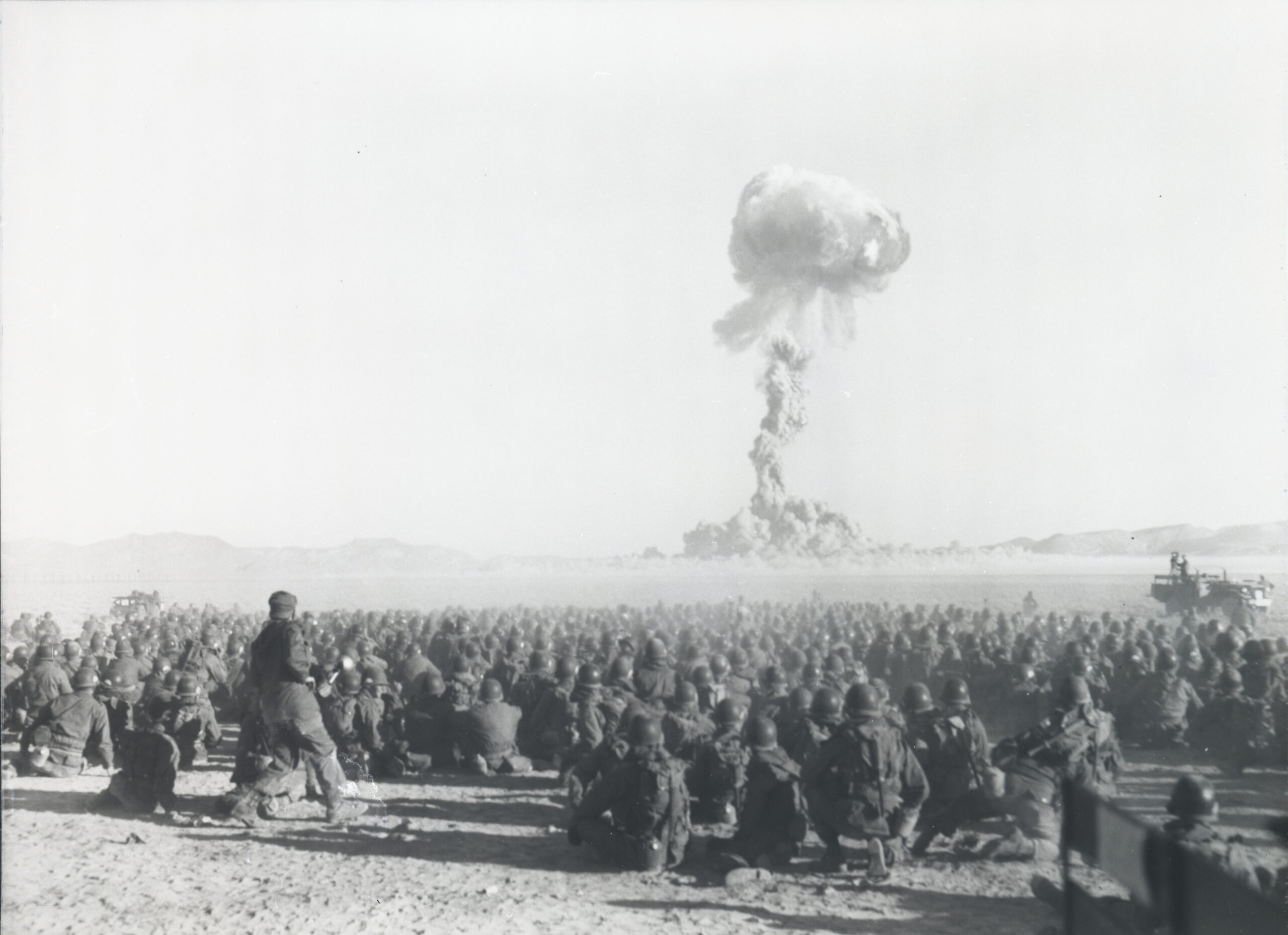
Did you know that atomic bomb testing boomed tourism in the Las Vegas area? Since you could see the mushroom clouds of the explosions from hotels, people would rent rooms in casinos and sit and watch from a distance.
Las Vegas casinos had what they would call “dawn bomb” parties and would specifically advertise the detonation times and host parties on the rooftops of casinos. Bartenders would also create fun drink names at the time. One was called “The Atomic Cocktail” and at the same time, show girls would show up to work with “Mushroom cloud” updos. You could even see some of these explosions in famous photos of people sitting by the poolside sunbathing while detonations were going on in the background.
It all started in 1951 during the Cold War, when the American government decided to establish the Atomic Energy Commission (AEC) to help monitor development of atomic science and technology. One reason the U.S. government had for opening the Las Vegas bombing and gunnery range—sitting at 680 sq miles long—was because of fear of the Soviet Union upgrading their atomic weapons.
The U.S. wanted to be the first to start the atomic bomb testing instead of them, so President Harry S. Truman authorized it on December 18th, 1950.
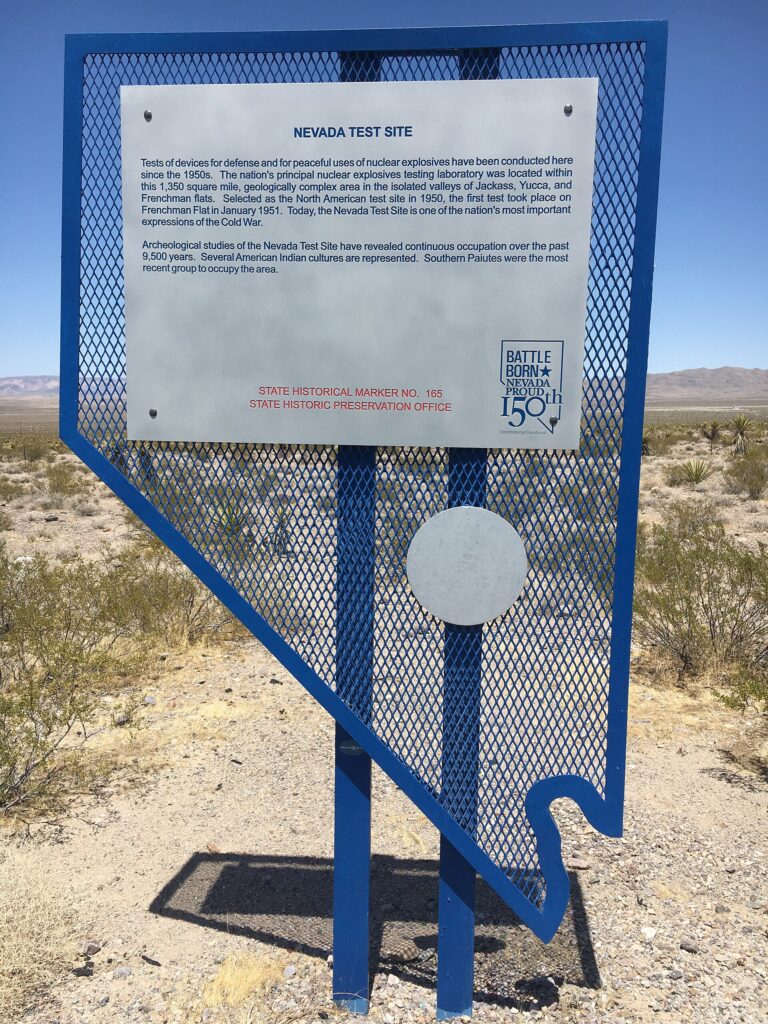
The U.S. government was involved in 29 separate atomic tests until August 5th, 1963. On that date, under President John F. Kennedy, the United States, United Kingdom, and the Soviet Union signed the Nuclear Test Ban Treaty that prohibited nuclear weapons and explosions tests in outer space, underwater and in the atmosphere. During this time, underground testing was not prohibited if there was no debris coming out into the atmosphere.
One reason for this ban was because over time, the area of the testing site became bigger and grew closer to cities near Las Vegas, and all the debris started taking a toll on the health of the people in the area. Many citizens had health problems due to radiation exposure. The fallout from these explosions didn’t just affect Nevada; it also affected Utah, Arizona, Washington, and Oregon.
During the 1950’s through the 1980’s, nuclear fallout was not clearly understood. Cancer rates increased and many citizens of St. George, Utah believed that this was the root cause of deaths, cancer rates and health issues in their community.
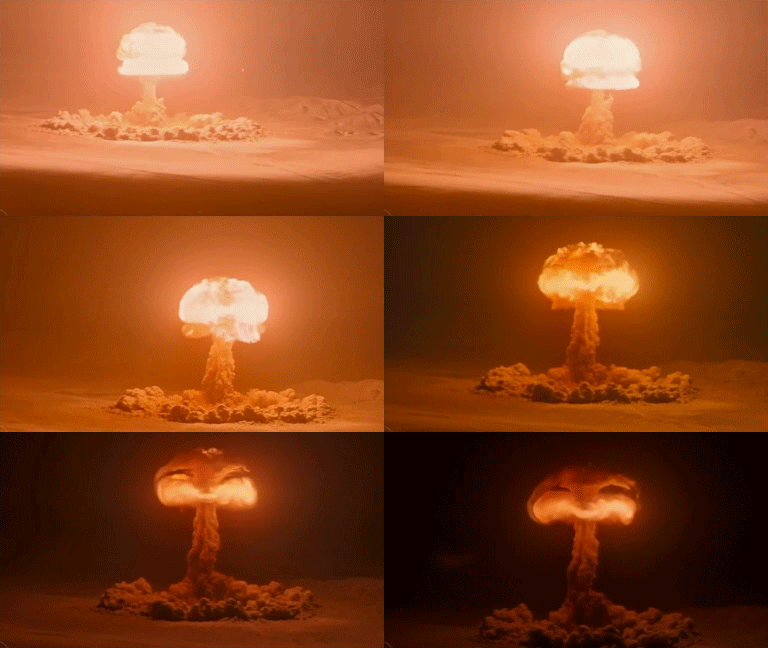
Other populations that were affected by the nuclear testing site were agriculture and wildlife surrounding the area. Operation Plumbbob released large amounts of radioiodine (Iodine-131) and exposed 32% of wildlife that lived there to dangerous chemicals that would affect them, too. Underground testing would leave cave-like holes that would later turn into dangerous sinkholes.
Local wildlife suffered severe hair loss, eyesight, and enlarged spleens. Extreme heat and shockwaves affected their vital organs and even ruptured them. The fallout also affected their drinking water, which led to some species getting thyroid cancer or having high concentration of radioactive iodine in their system. Finally, immense heat stripped a lot if not all the vegetation in the area these species would feed on.
At last, all this atomic bomb testing was put to stop on September 23rd, 1992, because it caused concern about potential health effects; not just for the citizens that lived nearby, but also the people that worked there and the environment. President George H. W. Bush signed the unilateral moratorium into law, and then in 1996, he signed the comprehensive nuclear test ban treaty, and it shifted completely to non-explosive subcritical experiments.
I would like to thank Nevada State Museum in Carson City for taking the time out of their day to give us a tour around the museum and for letting us explore all the wonderful displays. I really enjoyed my time at the museum, and I would highly recommend anyone to go there if they want to learn more about Nevada.
Related Link
Nevada Test Site (Atomic Heritage Foundation)
Photo credit: Main image – Operation Buster-Jangle: ‘Dog’ test, with troops participating in exercise Desert Rock I. It was the first U.S. nuclear field exercise conducted on land; troops shown are a mere 6 miles from the blast. At the Nevada Test Site, 1 November 1951. Federal Government of the United States, Public domain, via Wikimedia Commons.


_002.jpg)